

Smarter usage
Alongside the UK’s new Net Zero nuclear options, an obvious consideration is the business potential to lower energy usage. A new approach to measuring heat loss from homes with smart meters could make buildings more energy efficient and cut CO2, say researchers.
Loughborough University has just completed a key part of a £4m project funded by the Department for Business, Energy and Industrial Strategy (BEIS) called the Smart Meter Enabled Thermal Efficiency Ratings (SMETER) Innovation Programme.
The £1.1m scheme tested eight different meters that measure thermal performance in 30 homes; two-storey houses and single-storey bungalows built between around 1927 and 1990.
Smart meters were installed in every home to measure gas and electricity demand, and temperature and relative humidity sensors were installed in five to eight rooms of each home.
Dr David Allinson, of the Building Energy Research Group (BERG) in Loughborough’s School of Architecture, Building and Civil Engineering, explains: “The SMETER Programme has demonstrated we can measure the performance of our homes in a relatively inexpensive and non-intrusive way using smart meter data.
“National implementation of performance metrics for buildings would be a world-first and could help ensure that we all live in better performing homes that really do save energy, are less expensive to heat, and do reduce our harmful carbon emissions.
“It is exciting to be working with fantastic collaborators at the forefront of research and innovation in this important area.”
The best of worlds moving forwards might involve better integrated, transparently safe nuclear power combined with metering and upgrades of older homes and specifying the very best efficiency builds for new homes. BEIS has commissioned AECOM and Loughborough University to support a new SMETER Business Process Design project, phase 1 of which is now underway.
The goal of this project is to develop a business case for the national implementation of in-use performance metrics in support of Net Zero housing and heating.
SIGN UP TO OUR WEEKLY NEWSLETTER
We do not sell our lists, and you can easily unsubscribe if you so wish.
Lee Reevell, Head of Innovation and Architecture at Halton Housing, said, “Social landlords have big targets to hit, with a minimum EPC requirement of C by 2035 and Net Zero by 2050.
“With a combined total of 4.1 million social homes in the UK we understand the importance to the sector of developing new approaches to measuring the heat transfer coefficient (HTC) of our homes.
“The SMETER innovation programme has allowed us to understand how our buildings are performing, which measures we can take to improve their performance to meet new legislative requirement, as well as addressing fuel poverty in low-income households.”
So, better buildings, better monitored, ideally using less nuclear power. What else might be on the cards?
Fusion
Fusion research aims to mimic the sun; creating a new large-scale source of low carbon energy. When light atoms fuse together to form heavier ones, a large amount of energy is released. To do this, a few grams of hydrogen fuel are heated to extreme temperatures, ten times hotter than the centre of the sun, forming a plasma in which fusion reactions take place.
In theory, a commercial fusion power station would use the energy produced by fusion reactions to generate electricity. Some scientists think fusion has huge potential as a safe, sustainable, low carbon energy source.
Today, the UK Atomic Energy Authority (UKAEA) carries out fusion energy research on behalf of the UK Government, overseeing the UK’s fusion programme. It also hosts the world’s largest fusion research facility, JET (Joint European Torus), which it operates for scientists from around Europe.
UKAEA is now working with engineering firm Assystem to facilitate the development of STEP (Spherical Tokamak for Energy Production), the UKAEA technology that aims to take fusion energy to the commercial stage in the UK.
Work is ongoing across fusion research, power plant design, robotics, modelling, materials, and other specialist technology areas. The vital argument is that fusion energy offers potential for abundant power, using a sustainable fuel source while leaving no harmful environmental legacy.
Gary Reed, Assystem’s UK Fusion Energy Business Manager says: “Assystem is a well-established fusion engineering company, and we are invested in the UK’s ambition to drive the technology forward, an example of which is our 2021 report: ‘Fusion Energy: A global effort, a UK opportunity’ that highlights the pathway to the commercialisation of fusion energy technology, focusing on the potential benefits for the UK in driving its development.”
A myriad of paths forward
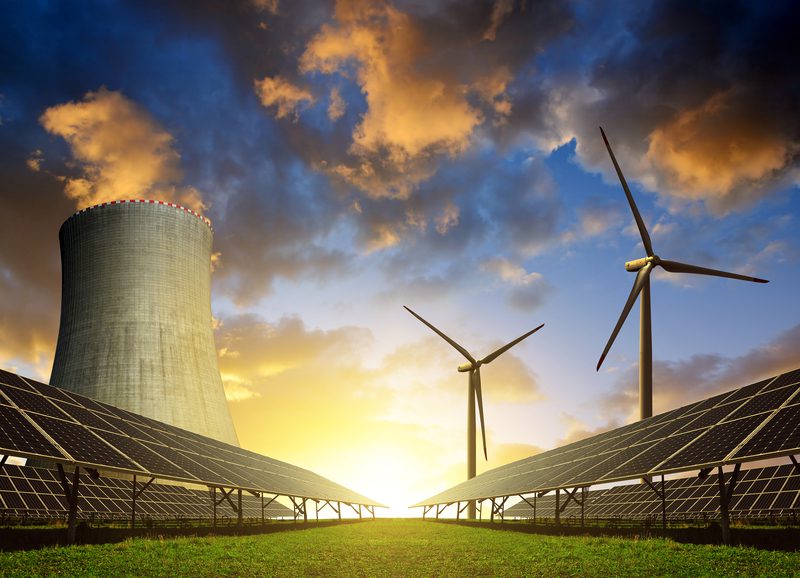
Self-evidently, the UK requires some form of nuclear power to help the drive to Net Zero. There simply won’t be the juice to power the country without it across the transition. The question will surround getting new frameworks in place to guarantee safety, making sure we use the least power we possibly can, and whether new fusion tech can come online fast enough. Right now, fusion is exciting but unproven commercially.
Soon, we’ll review wind, solar and tidal power in these pages too, helping businesses learn where UK energy to 2050 is going.